
Professional office carpet cleaning London is necessary because daily vacuuming only reaches surface debris, leaving deep-seated dirt and allergens trapped within the fibres. Regular deep cleaning eliminates these hidden contaminants; this process improves indoor air quality and preserves the professional appearance of the workspace.
Most London facility managers believe that a nightly vacuuming schedule equates to a sterile workspace. However, the visual absence of surface debris often masks a more concerning reality beneath the fibers. In a city where foot traffic brings in constant pollutants, standard commercial hoovers simply cannot reach the deeply embedded allergens and pathogens that compromise your indoor air quality. This hidden accumulation does more than just affect health; it actively degrades the structural integrity of your flooring. In this guide, we examine why traditional cleaning methods fail the deep clean test. You will discover the microscopic reality of office carpets, the optimal frequency for professional intervention, and how NanoDefence technology extends the lifespan of your assets while maximizing your return on investment.
The Illusion of the Clean London Office Carpet
Facility managers often mistake a tidy surface for a sanitary environment. After a contract cleaner finishes their nightly round, a carpet usually looks uniform and presentable. However, visual neatness is a poor metric for actual hygiene. Standard commercial vacuums are designed for surface maintenance, removing loose debris, hair, and lint from the tips of the fibers. They lack the specialized airflow and mechanical agitation required to reach the base of the carpet pile, where the most damaging contaminants reside.
London presents a unique challenge for floor maintenance due to the nature of urban debris. Commuters track in a specific cocktail of London grit, comprised of abrasive silica and microscopic metallic dust from the London Underground. These particles are heavy and sink quickly to the bottom of the pile. Once settled, they create the Sandpaper Effect. Every time an employee walks across the floor, these sharp particles act like microscopic saws, grinding against the carpet fibers under the pressure of footfall. This process does not just hold dirt; it physically destroys the carpet structural integrity from the bottom up.
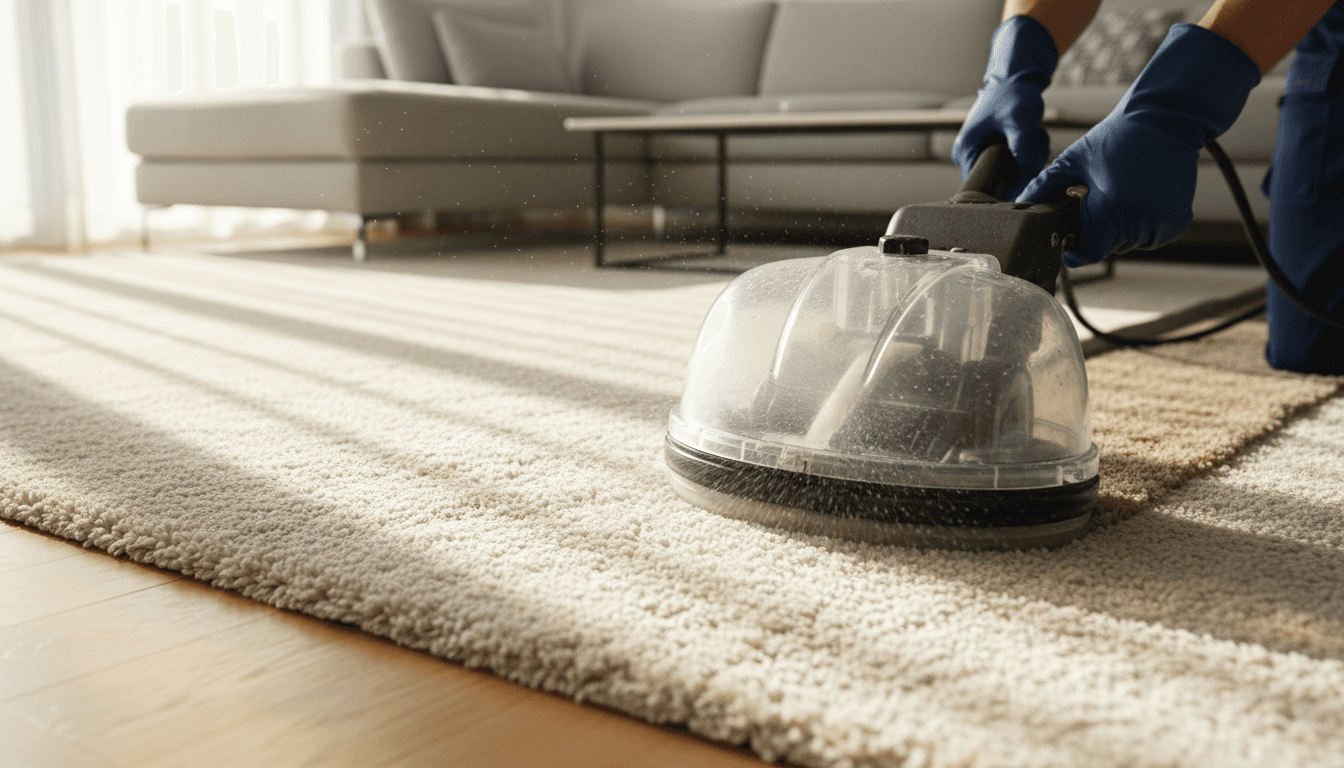
Professional office carpet cleaning London requires a move beyond simple suction. While a standard hoover pulls air through the top layers, professional deep extraction uses controlled pressure and specialized chemistry to break the surface tension of oils and pollutants. Differentiating between surface-level aesthetics and fiber-level hygiene is critical. A carpet that looks clean to the naked eye can still be a reservoir for London urban pollutants, necessitating periodic deep extraction to remove the embedded grit that daily vacuuming simply cannot reach.
The Microscopic Reality: What is Hiding in Your Office Floor?
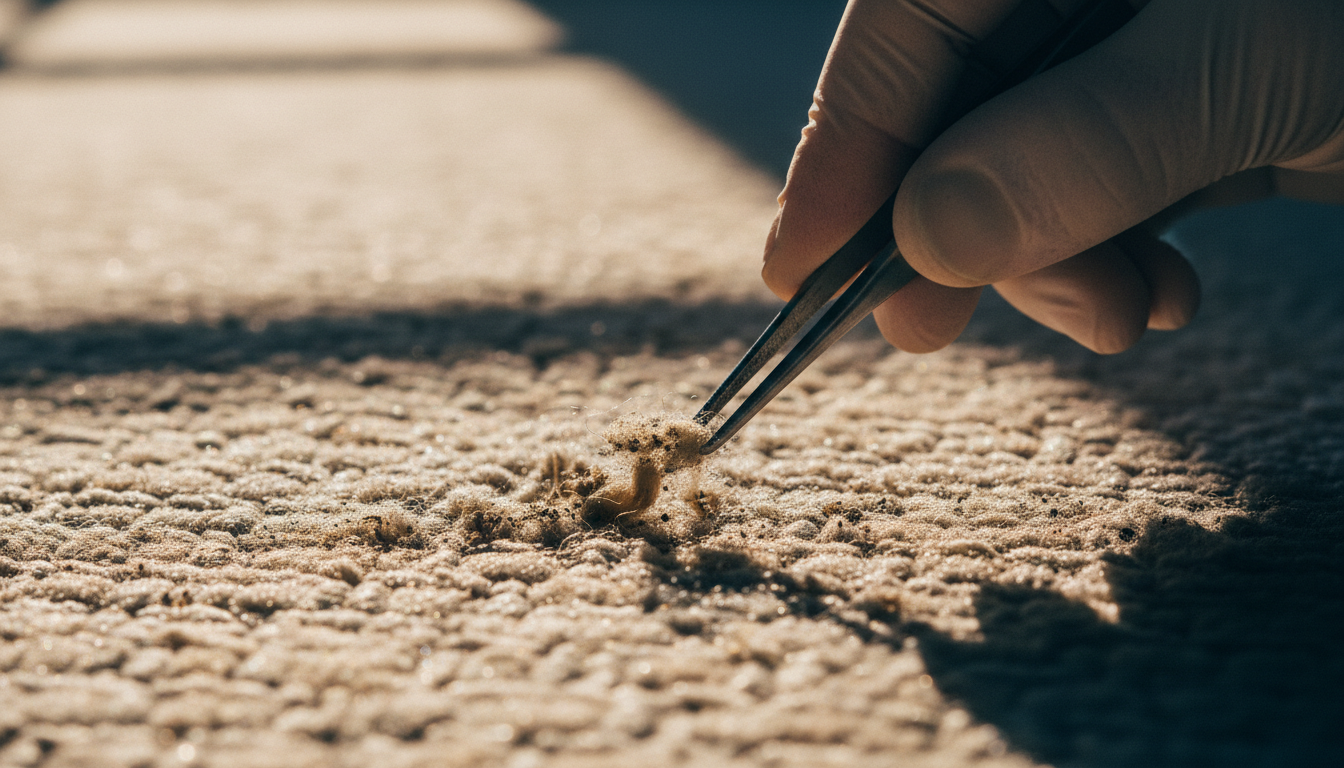
The abrasive grit discussed previously is merely the mechanical component of a much larger microscopic issue. London carpets serve as a massive, unintended filter for urban pollutants. Commuters traveling through high-traffic hubs like Canary Wharf or the City track in a specific microscopic cocktail. This includes brake dust, rubber particles from tires, and oily soot from city smog. These particles are chemically reactive; they do not just sit there. Instead, they bond with the carpet fibers, creating a sticky residue that captures even more dust and pollutants over time.
Beyond external pollutants, internal biological loads contribute to the decline of indoor air quality. One of the most common complaints in London offices is a persistent, stale coffee carpet smell. When a drink is spilled, the liquid often bypasses the fibers and seeps directly into the carpet backing or the subfloor. A standard vacuum only addresses the dried surface residue. The moisture and organic matter trapped underneath become a breeding ground for bacteria and fungi, which release volatile organic compounds (VOCs) into the office air. These odors are a clear signal that the floor is no longer sanitary.
This accumulation is a primary driver of Sick Building Syndrome. As the carpet becomes saturated with allergens and fine particulate matter, it loses its ability to act as an effective filter. Instead, every step releases these particles back into the breathing zone of employees. Professional commercial carpet cleaning London is not just about aesthetics; it is a necessary health intervention. By extracting these deep-seated pollutants, businesses can significantly reduce respiratory irritation and fatigue among staff. If you are noticing lingering odors or increased employee sensitivity to dust, you should contact NanoDefence for a quote to restore your workspace hygiene and air quality.
Why Standard Commercial Hoovers Fail the Deep Clean Test
Standard office vacuums are designed for maintenance, not restoration. Their primary function is to create a high velocity airflow that lifts dry, loose debris from the upper third of the carpet pile. While essential for daily upkeep, this mechanism is physically incapable of breaking the surface tension of the oily pollutants prevalent in London workspaces. Smog particles, skin oils, and food residues form a chemical bond with the fibers that no amount of dry suction can overcome.
Professional commercial carpet cleaning London utilizes heated, pressurized water and specific emulsifiers to liquefy these sticky binders. Without this chemical intervention, the abrasive grit remains glued to the base of the carpet. This leads to a phenomenon known as pile crushing. When heavy grit is trapped at the primary backing, it acts like a microscopic saw; every time an employee walks over the area, the weight of their step grinds the delicate fibers against these sharp particles.
Over time, this process literally shears the fibers away at their base, leading to permanent traffic lanes that appear dark and matted even after a thorough hoovering. This mechanical damage is irreversible. Once the fibers are shredded at the base, the carpet loses its structural resilience and aesthetic luster, necessitating premature and costly replacement. For businesses noticing these flattened, dull paths in high traffic zones, it is vital to contact NanoDefence for a quote before the mechanical wear becomes permanent.
How Often Should Office Carpets Be Professionally Cleaned in London?
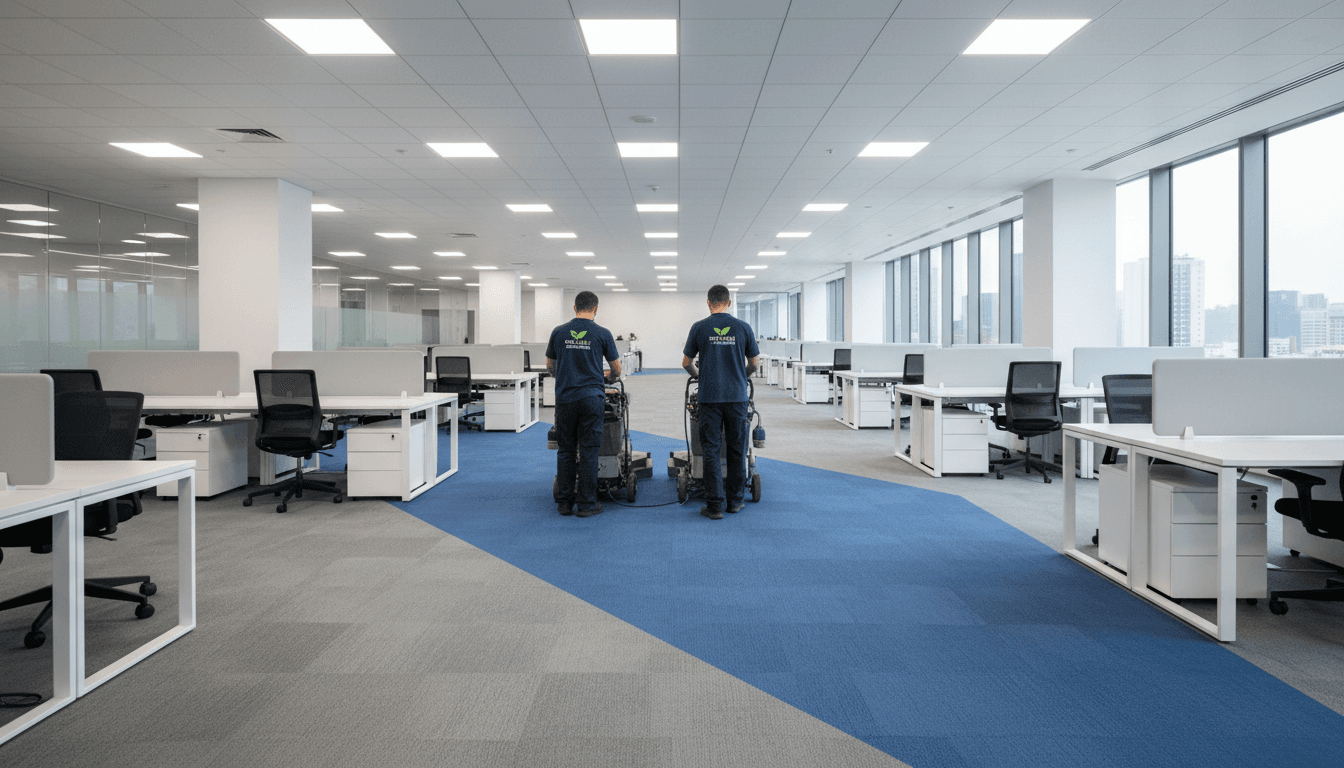
Determining the frequency of professional extraction depends on the specific micro-environment of your London workspace. For high-traffic zones like receptions, lift lobbies, and main corridors in central London buildings, a deep clean every 3 to 6 months is the industry standard for maintaining fiber integrity. These areas act as the primary filter for the city, capturing the bulk of the abrasive Underground dust and street oils before employees even reach their desks. Moving beyond these transition points, general open-plan offices and peripheral meeting rooms typically require professional attention every 6 to 12 months.
The nature of the business and the local culture also dictate the cleaning cadence. A corporate firm in the City, characterized by heavy footfall in formal, hard-soled footwear, creates intense mechanical pressure that accelerates fiber fatigue. Conversely, a creative studio in Shoreditch may face different challenges, such as pet dander or more frequent food and drink spills in collaborative zones where sneakers track in softer but often more varied organic debris. Each environment requires a tailored approach to office carpet cleaning London to address these specific soil loads.
Facility managers should view these intervals as a preventative maintenance strategy rather than a reactive fix. Waiting for visible soilage or dark traffic lanes to appear means the mechanical damage is already underway. By the time a carpet looks dirty, the backing is likely saturated with the microscopic grit that causes structural failure. As a consultant for London businesses, NanoDefence provides site-specific assessments to determine the optimal commercial carpet cleaning London cadence for your square meterage and usage patterns. To establish a proactive maintenance plan for your facility, contact NanoDefence for a quote.
Extending Carpet Life with Nano-Technology Protection
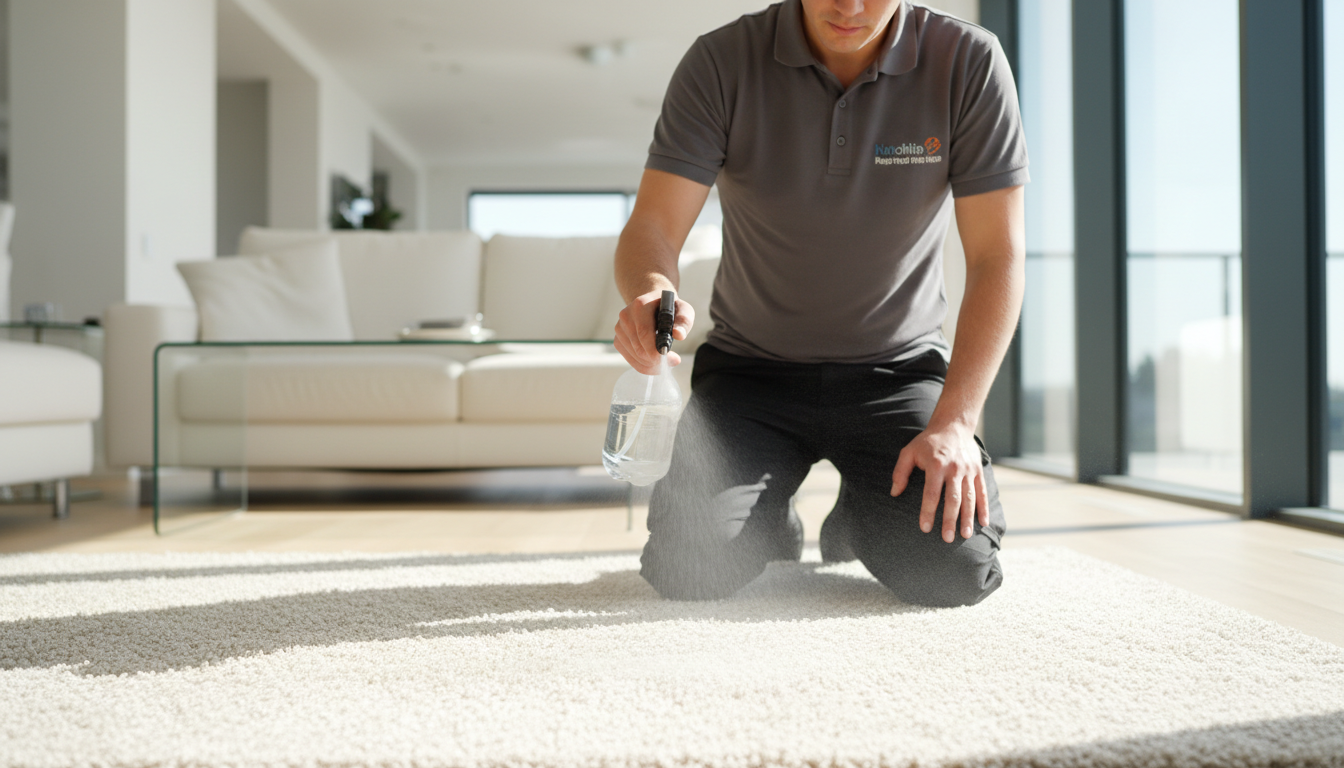
While establishing a rigorous cleaning schedule is vital, the most effective way to preserve commercial flooring is to change how fibers interact with dirt. This is achieved through nano technology surface protection, a specialty that moves beyond traditional reactive cleaning. Unlike standard topical treatments that can leave a sticky residue, nanotechnology operates at a molecular level to create a durable, hydrophobic barrier around every individual carpet fiber.
This invisible shield prevents the abrasive London grit and oily smog particles from forming a chemical bond with the fabric. Because the surface energy of the carpet is lowered, liquids and dry contaminants are repelled; they remain suspended on the surface rather than sinking into the primary backing. This fundamentally enhances the performance of your onsite cleaning team. When the hidden dirt is prevented from anchoring deep within the pile, a standard daily hoover can actually remove it effectively.
By integrating this protective layer into your office carpet cleaning London strategy, you transform the carpet from a passive filter into an active, easy to clean surface. This technology significantly reduces the rate of pile crushing and fiber abrasion, ensuring that the high traffic zones in your facility maintain their texture and color for years longer than unprotected floors. To learn more about how this treatment can be applied to your workspace, contact NanoDefence for a quote.
Understanding Office Carpet Cleaning London Costs and ROI
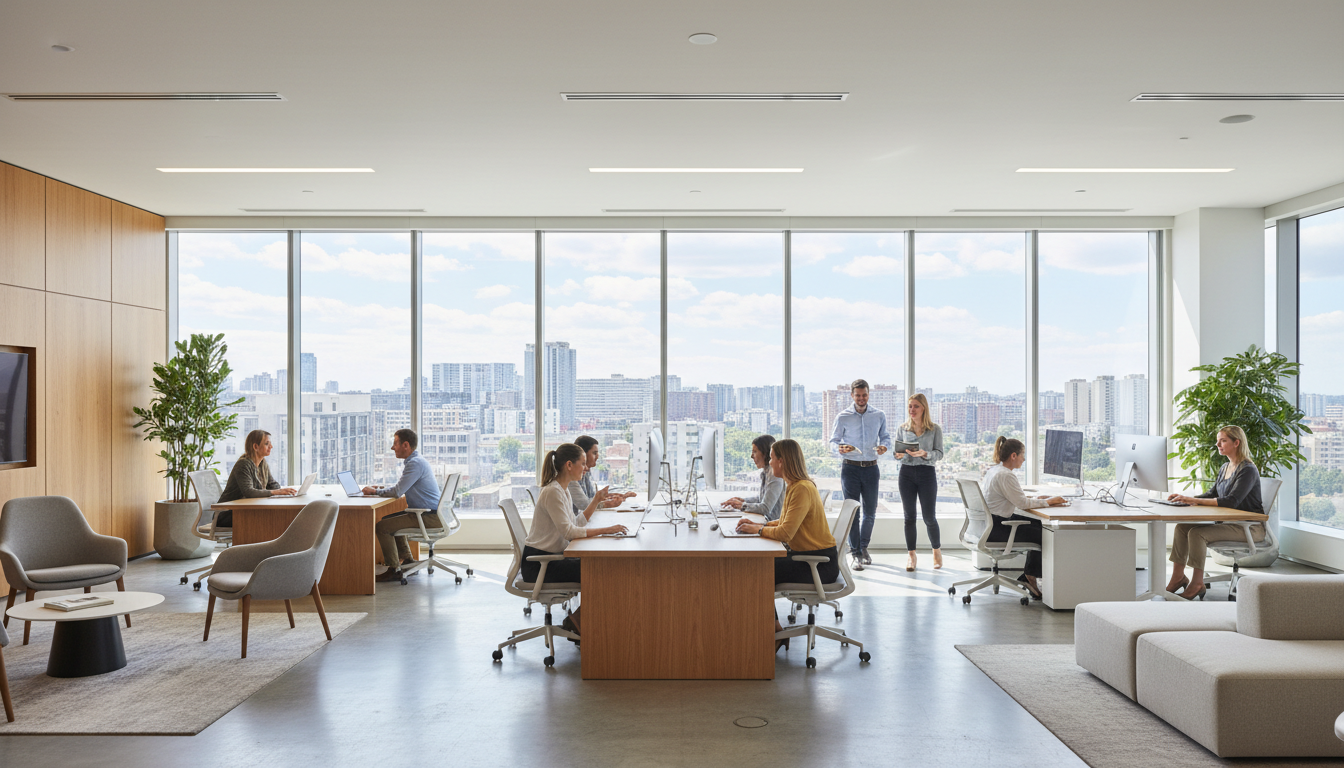
Calculating the investment for professional maintenance requires looking beyond a simple pence-per-square-meter figure. For businesses seeking commercial carpet cleaning London, quotes are influenced by three primary variables: total square meterage, the specific fiber construction, and the current level of soil suspension. Carpet tiles, common in modern City developments, allow for modular maintenance but require specialized attention to the joints where grit accumulates. In contrast, traditional broadloom carpets often found in heritage offices in Mayfair or Marylebone demand a different moisture control profile to prevent shrinkage and backing delamination.
The financial logic for this service is rooted in asset protection. In a city where commercial rents and fit-out costs are among the highest globally, the carpet is a significant capital asset. Replacing office flooring involves not just the material cost, but the massive operational disruption of moving furniture, re-cabling, and temporary staff relocation. By the time a carpet looks worn out, it is usually just buried in the abrasive grit discussed in previous sections. Professional office carpet cleaning London removes these mechanical agents of destruction, effectively resetting the wear clock.
Factor | Impact on Quote | Asset Protection Benefit |
|---|---|---|
Square Meterage | Volume efficiencies apply to larger floor plates. | Lowers the per-square-meter cost of maintenance. |
Carpet Type | Tiles vs. Broadloom dictate the extraction method. | Prevents fiber-specific damage or delamination. |
Soil Loading | Heavy staining requires longer chemical dwell times. | Restores aesthetic value to high-traffic zones. |
A proactive maintenance plan typically yields a high return on investment by delaying full replacement by several years. When coupled with nano technology surface protection, the lifespan of the material is extended even further; this shifts the expense from a reactive repair to a predictable, lower-cost operational maintenance item. To understand how these factors apply to your specific floor plate, contact NanoDefence for a quote and receive a detailed assessment of your facility requirements.
Daily vacuuming is an essential habit, but it cannot reach the deep layers of grime that impact air quality and carpet longevity. To maintain a truly professional workspace, specialized deep cleaning is the only way to remove what standard machines leave behind. If you want expert help in restoring your office environment, feel free to learn more about our team and our approach to hygiene. Prioritizing thorough care will ensure a healthier, more productive atmosphere for everyone in your building.