
Landlords can extend carpet life rental property London by applying advanced nano protection treatments to repel stains and moisture; this protective layer prevents spills from soaking into the fibers. Implementing professional hot-water extraction cleaning between tenancies and choosing high-density synthetic materials further ensures that floor coverings remain durable for up to a decade.
In the competitive London rental market, carpets are often a landlord's most vulnerable asset. High tenant turnover and the relentless pace of city living mean that floor coverings frequently succumb to premature wear well before their expected lifecycle ends. Replacing these surfaces every few years is not merely an inconvenience; it represents a significant drain on your net yields and portfolio profitability. While standard end of tenancy cleaning may remove surface debris, it rarely addresses the structural degradation of the fibers or the long term impact of the UK 8 year depreciation rule. This guide examines a more sophisticated approach to asset management through advanced nano protection. You will learn how to navigate evolving pet regulations, optimize maintenance during void periods, and utilize molecular level shielding to effectively double the service life of your property's flooring.
The Financial Reality of Rental Carpets in the London Property Market
In the high-velocity London rental market, flooring represents one of the most significant recurring capital expenditures. While standard UK guidance suggests a carpet should last between five and eight years, the reality in central boroughs such as Westminster or Camden is often far shorter. High tenant turnover combined with the constant influx of urban grit and London soot creates a punishing environment for floor fibers.
To extend carpet life rental property London, landlords must view maintenance through the lens of Return on Investment rather than simple aesthetics. Fine particulate matter tracked in from London streets settles deep into the pile, where it acts like sandpaper, severing fibers with every footstep. Utilizing a NanoDefence professional process during carpet cleaning between tenancies transforms a routine chore into a yield protection strategy.
By integrating nano technology surface protection, property managers can mitigate the abrasive effects of the city. This approach ensures the carpet reaches its full depreciable lifespan, effectively delaying the substantial costs associated with a full replacement. Protecting the fiber integrity is not merely about presenting a clean home; it is a direct method of protecting the net yield of your property portfolio.
Understanding Carpet Depreciation and the 8 Year Rule in the UK
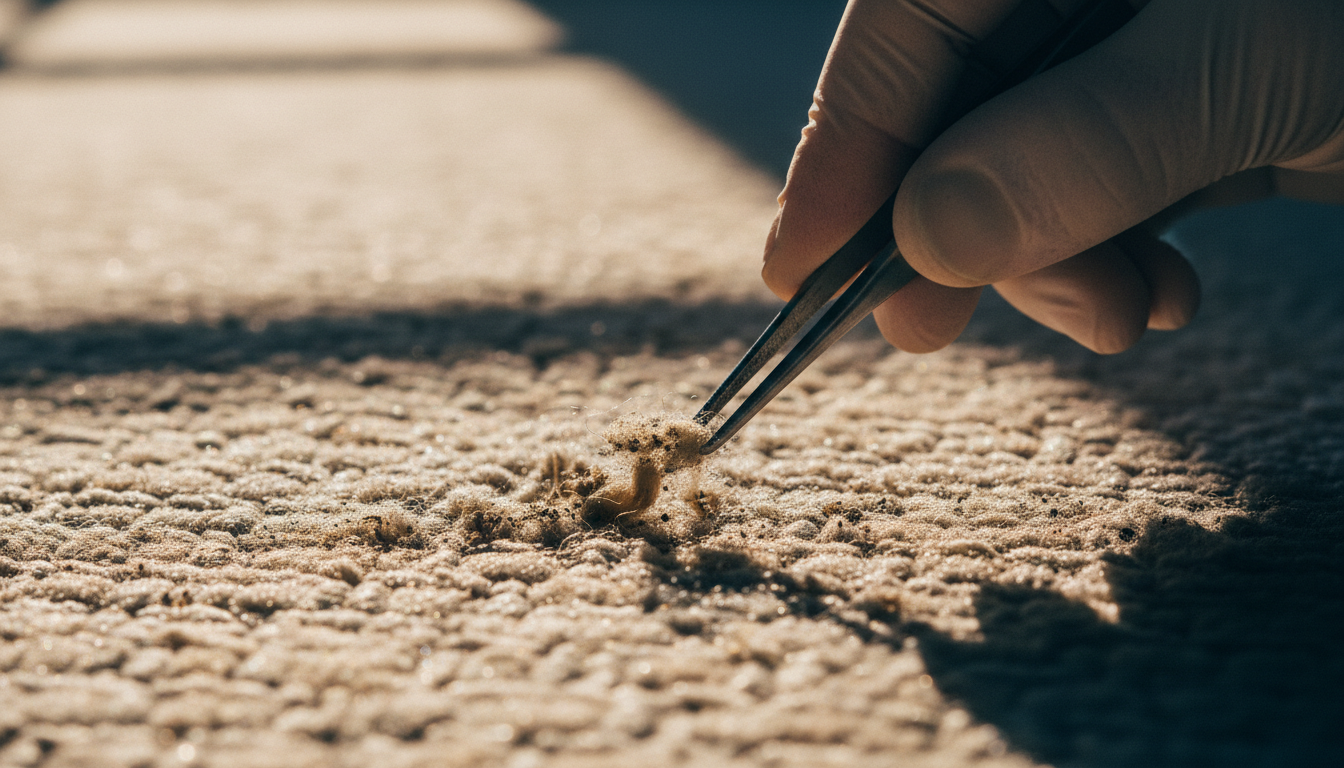
The Tenancy Deposit Scheme (TDS) and other UK adjudicators operate on the principle of indemnity; they ensure the landlord is not "bettered" by a claim. When a dispute arises, the TDS applies a straight-line depreciation model to determine the remaining value of a carpet. This means if a budget carpet with an expected three to five year lifespan is damaged after three years, its financial value is effectively zero in the eyes of an adjudicator. Premium carpets, such as heavy-duty twists with high-density underlay, offer more protection with an eight to twelve year lifespan, but only if their physical condition reflects that expected longevity.
To successfully extend carpet life rental property London landlords must document a rigorous maintenance schedule. Simply showing a receipt for a basic clean is often insufficient to avoid the betterment trap. Adjudicators look for evidence that the landlord has actively preserved the flooring to prevent premature degradation. By implementing a NanoDefence professional process, you provide technical proof of specialized care that maintains fiber integrity.
Carpet Quality | Expected Lifespan | Typical Construction |
|---|---|---|
Budget | 3 - 5 Years | Thin loop pile, basic underlay |
Mid-Range | 5 - 8 Years | Standard twist pile, synthetic blends |
Premium | 8 - 12 Years | Heavy-duty twist, high-density underlay |
Scheduling carpet cleaning between tenancies that includes nano technology surface protection serves as a vital legal record. It demonstrates that you have shielded the investment against the deep-seated grit and organic stains common in London. This professional intervention makes it far easier to argue that tenant damage exceeds fair wear and tear, ensuring you do not pay for full replacements out of pocket due to neglected maintenance.
Why Standard End of Tenancy Cleaning Often Fails to Extend Life
Many property managers opt for the most affordable end of tenancy package available, assuming any steam clean fulfills their maintenance obligation. However, budget services often rely on high-residue surfactants that are not adequately neutralized or rinsed. These leftover soaps remain sticky once dry, acting as a magnet for new dirt and leading to a cycle of rapid re-soiling. For a landlord trying to extend carpet life rental property London provides, this is counterproductive; the carpet often appears dull and grey only weeks after the new tenant moves in.
The technical failure of budget cleaning lies in its inability to remove heavy particulates. London street grit, a mix of sharp minerals and carbon soot, settles deep into the carpet backing. If a cleaning service lacks the industrial suction required for true deep extraction, this grit remains in place. Every footstep then grinds these sharp edges against the yarn, shearing the fibers at their base. This mechanical damage is irreversible and leads to premature thinning and "balding" in high traffic zones.
In contrast, the NanoDefence professional process focuses on complete soil removal and chemical neutrality. By utilizing high-heat deep extraction, we pull abrasive grit from the pile foundation rather than just refreshing the surface. This level of carpet cleaning between tenancies ensures the floor is truly clean, not just visually brightened for a check-in inspection.
The Nano Technology Edge: Armor for Your Investment

While deep extraction removes abrasive grit, it leaves fibers vulnerable to the next inevitable spill. To truly extend carpet life rental property London landlords should implement a molecular shield. The NanoDefence professional process involves the application of nano technology surface protection which creates an invisible, hydrophobic barrier around every individual fiber. Unlike traditional topical treatments that sit on the surface and wear off quickly, nano-scale particles form a covalent bond with the yarn, significantly increasing the surface tension of the flooring material.
When a tenant spills red wine, coffee, or experiences a pet accident, the liquid does not immediately penetrate the pile or the backing. Instead, it beads up on the surface, trapped by the lotus effect. For a property manager, this technology effectively buys time. It prevents a localized accident from becoming a permanent chemical stain that would otherwise necessitate a partial replacement or a complex deposit dispute. This protection is particularly vital for the polypropylene (synthetic) carpets ubiquitous in the London rental market. While polypropylene is naturally durable, it is oleophilic, meaning it attracts oils from skin, footwear, and cooking vapours. Nano-protection counteracts this by repelling both water and oil-based contaminants.
Feature | Technical Effect | Landlord ROI |
|
|---|---|---|---|
Hydrophobic Barrier | High surface tension | Spills bead up for easy blotting | |
Oleophilic Resistance | Repels oils and fats | Prevents "greying" in high-traffic zones | |
Molecular Bonding | Covalent fiber attachment | Long-lasting protection that won't walk off | |
Soil Release | Lowers surface energy | Faster, cheaper cleaning during void periods |
Integrating this armor during carpet cleaning between tenancies transforms the flooring into an asset that is fundamentally easier to maintain. During the next void period, soil is released far more readily from protected fibers, reducing the labor intensity and chemical requirements of the refresh. This proactive strategy ensures the carpet remains in a lettable condition for several years beyond the standard depreciation schedule, directly bolstering the property's bottom line.
Strategic Maintenance for Property Managers During Void Periods
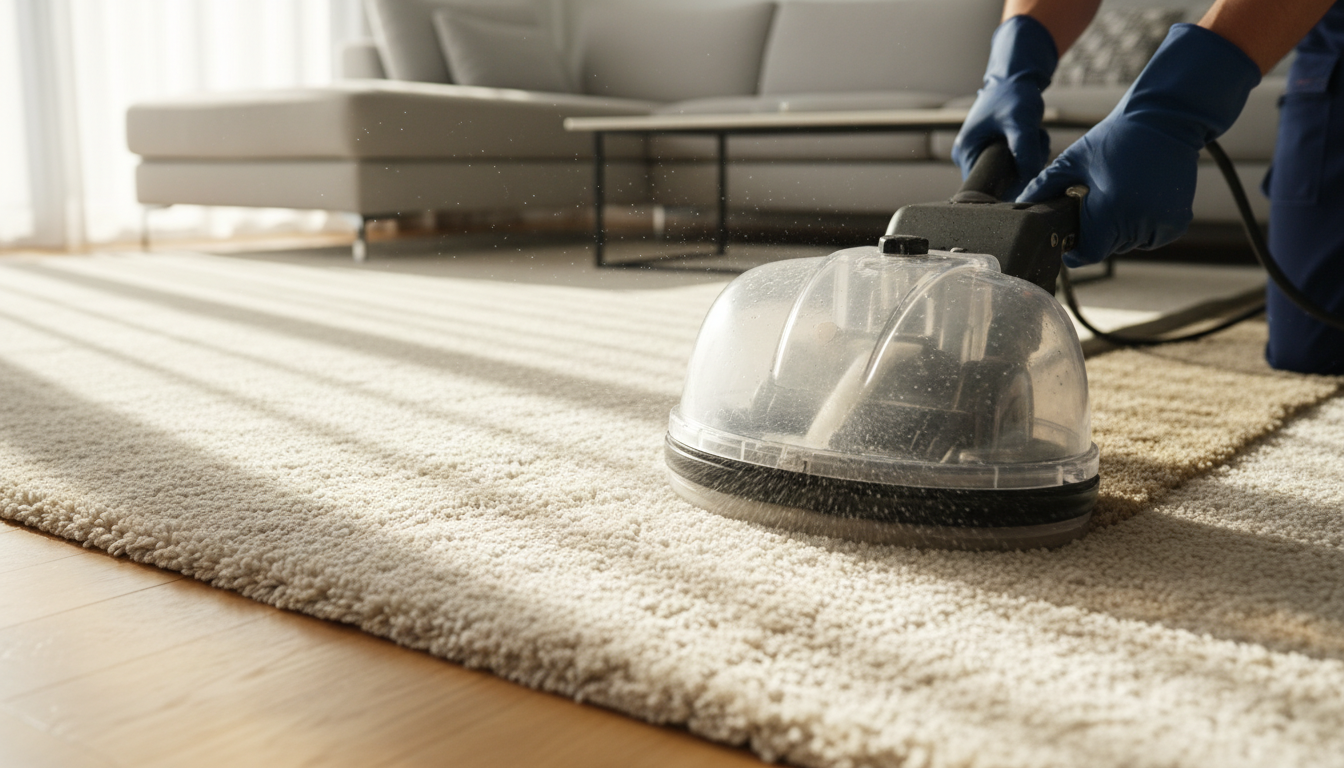
Maximizing the lifespan of flooring requires precision timing. The 24 to 48 hour void period between tenancies represents the most strategic window for professional intervention. Executing a systematic maintenance plan while the property is vacated allows for edge-to-edge access that is impossible once furniture is in place, ensuring no area of the pile is left vulnerable.
A professional void period protocol should follow three critical stages:
Moth and Pest Inspection: London period conversions are particularly susceptible to the common clothes moth. An empty room allows for a thorough inspection of the perimeter and corners, where larvae often dwell undisturbed under baseboards.
High-Heat Deep Extraction: Utilizing the NanoDefence professional process at this stage serves a dual purpose. It removes deep-seated abrasive grit and uses thermal energy to neutralize bacteria and allergens, providing a sterile environment for the new occupant.
Protective Re-application: Freshly cleaned fibers are uniquely receptive to nano technology surface protection. Re-applying this shield while the carpet is free of furniture ensures a uniform hydrophobic barrier across the entire surface area.
Scheduling carpet cleaning between tenancies is the most cost-effective way to extend carpet life rental property London managers oversee. Technicians can operate with higher efficiency in empty spaces, reducing labor time and ensuring the fastest possible drying period. This proactive reset ensures the flooring is not only visually pristine but structurally reinforced before the next cycle of foot traffic begins.
Managing Tenants and Pets: The New Regulatory Landscape
The legislative environment is shifting with the Renters Rights Bill, which restricts a landlord's ability to unreasonably refuse pets. This change necessitates a more robust approach to flooring durability, as pets introduce organic proteins and moisture that can lead to permanent odors and bacterial growth. Utilizing the NanoDefence professional process provides a critical safeguard in this new landscape. The nano technology surface protection works by sealing the fibers, preventing pet accidents from soaking into the backing where odors typically become trapped.
To further extend carpet life rental property London tenants inhabit, landlords should provide a brief Care and Maintenance guide at check-in. This moves the relationship from conflict to collaboration by educating the occupant on how to preserve the asset. Key instructions include:
The Blotting Rule: Instruct tenants to never rub or scrub a spill. Rubbing causes "fuzzing" or permanent pile distortion known as bursting. Instead, they should use a clean, white cloth to blot liquid upwards.
No-Shoe Policy: Encouraging a shoe-free home prevents sharp London soot and grit from reaching the carpet foundation, where it acts as an abrasive.
Pet Hygiene: Advise on regular vacuuming with a HEPA-filter machine to remove dander and hair before they are crushed into the pile.
Setting these professional expectations, backed by a carpet cleaning between tenancies schedule, ensures the flooring survives the increased wear associated with modern, pet-friendly lets.
When to Clean vs. When to Replace: Making the Call
Determining whether to salvage an existing floor covering or invest in a full replacement requires a technical assessment of the carpet's structural integrity. To effectively extend carpet life rental property London landlords manage, one must distinguish between surface degradation and terminal damage. A professional intervention can often rectify visual issues that appear permanent to the untrained eye, whereas physical failure of the material mandates a new installation.
Condition | Action Required | Technical Rationale |
|---|---|---|
Cigarette burns or structural tears | Replace | These present trip hazards and violate safety standards. |
Delamination (backing separation) | Replace | The secondary backing has detached, causing permanent rippling. |
Dark traffic lanes and dullness | Clean | This is compacted soil that the NanoDefence professional process can extract. |
Persistent organic or pet odors | Clean | High-heat extraction neutralizes the bacteria causing the scent. |
Opting for a £200 professional refresh instead of a £1,200 replacement allows you to delay significant capital expenditure by two to three years. This is especially effective when combined with nano technology surface protection. By scheduling carpet cleaning between tenancies, you address the common greying effect where urban grit has dulled the pile. This process restores the vibrancy and texture of the fibers, ensuring the property remains attractive to high-quality tenants without the disruption and cost of fitting new carpets.