Professionally cleaned carpets typically dry in 6 to 12 hours, though the carpet cleaning drying time winter London residents face can extend to 24 hours without proper ventilation. To prevent mould and speed up the process, keep the heating on at a moderate temperature and use fans to circulate air. These actions are essential for managing moisture and ensuring a quick return to normal use during the colder months.
Waiting for carpets to dry in the depths of a London winter often feels like an exercise in futility. Between the persistent dampness of the Thames Valley air and the limited ventilation in many period properties, what should be a routine cleaning can quickly turn into a lingering moisture problem. This delay is more than a minor inconvenience; it is a critical window where stagnant water trapped in deep pile becomes a breeding ground for mould and mildew. Understanding the specific mechanics of winter evaporation in a maritime climate is essential for maintaining a healthy indoor environment. In this guide, we examine the realistic timelines for seasonal drying and the architectural factors that influence them. You will discover the high stakes of the 48-hour rule, why professional extraction is non-negotiable in cold weather, and how advanced nanotechnology can shield your textiles from future dampness.
The Real Timeline for Carpet Cleaning Drying Time in a London Winter
Understanding the precise window for moisture evaporation is essential when managing a property during the colder months. In standard conditions, most carpets dry within 6 to 12 hours. However, the carpet cleaning drying time winter London residents encounter is often extended by high ambient humidity and lower external temperatures. It is not unusual for a deep-cleaned carpet to require up to 24 hours to be completely dry to the touch and safe for heavy foot traffic.
The specific fibre of your carpet dictates the speed of this process. Synthetic materials, such as nylon or polyester, are non-porous and release moisture quickly. Conversely, natural wool is highly absorbent; it holds water deep within its core and demands a longer evaporation period.
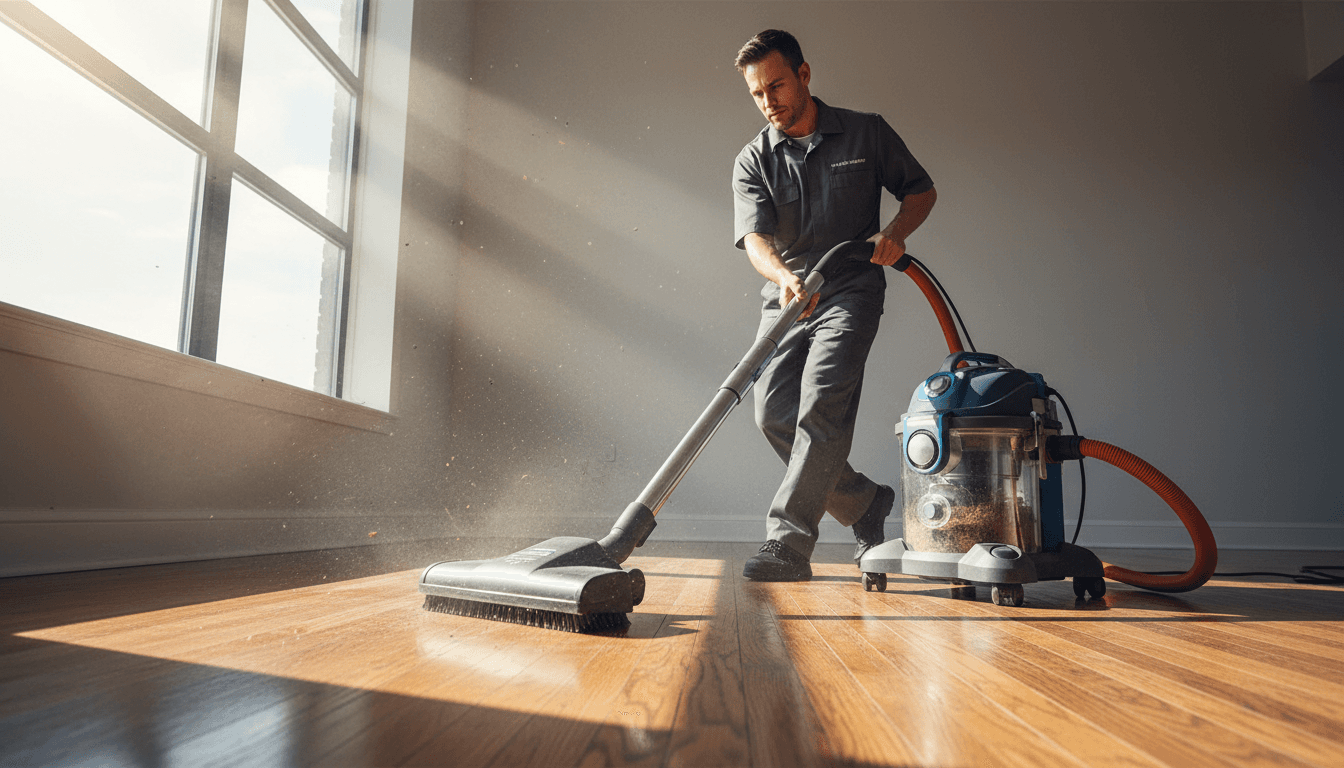
At NanoDefence, our professional carpet, rug, and upholstery cleaning services utilise high-vacuum hot water extraction. This systematic approach is critical during a London winter because our equipment removes 90-95% of the moisture used during the deep clean. By leaving the pile only slightly damp rather than saturated, we significantly reduce the risk of secondary issues like browning or microbial growth. If you are planning a cleaning for a particularly large or poorly ventilated space, you can contact our London team to discuss tailored drying strategies for your specific environment.
Why London's Climate and Architecture Impact Drying Speed
The unique interplay between the city's meteorological conditions and its historic housing stock creates a complex environment for moisture evaporation. When considering carpet cleaning drying time winter London residents must account for a relative humidity that frequently exceeds 80% during the colder months. Unlike drier continental climates, London’s air is often saturated with moisture, meaning the atmosphere has a limited capacity to absorb additional water from a damp carpet pile.
The architectural nuances of Victorian and Edwardian properties further complicate this process. These buildings were originally designed to breathe through chimneys and suspended floorboards, yet many have been modernised in ways that inadvertently trap moisture. Single-glazed windows, still prevalent in many conservation areas, act as cold surfaces where internal humidity condenses into liquid water. This condensation competes with the drying process; as the carpet releases moisture into the air, it often settles on these cold panes or walls rather than exiting the room, creating a stagnant, damp environment.
A common misconception is that opening a window is always the best solution for airflow. However, if the outdoor air is damp or raining, you may be inviting more moisture into the space, which actively slows down evaporation. In a typical London flat or terrace, internal climate control is far more effective. By maintaining a consistent temperature and using the building’s heating system to lower relative humidity, you create a gradient that draws moisture out of the fibres more efficiently than cold, damp external air. For properties with particularly poor natural ventilation, our professional carpet, rug, and upholstery cleaning services utilise high-powered extraction to ensure we leave behind the absolute minimum amount of liquid. If you are concerned about the airflow in your specific property, you can contact our London team for guidance on preparing your space before a winter deep clean.
The 48 Hour Rule: Why Slow Drying Risks Mould in Your Home
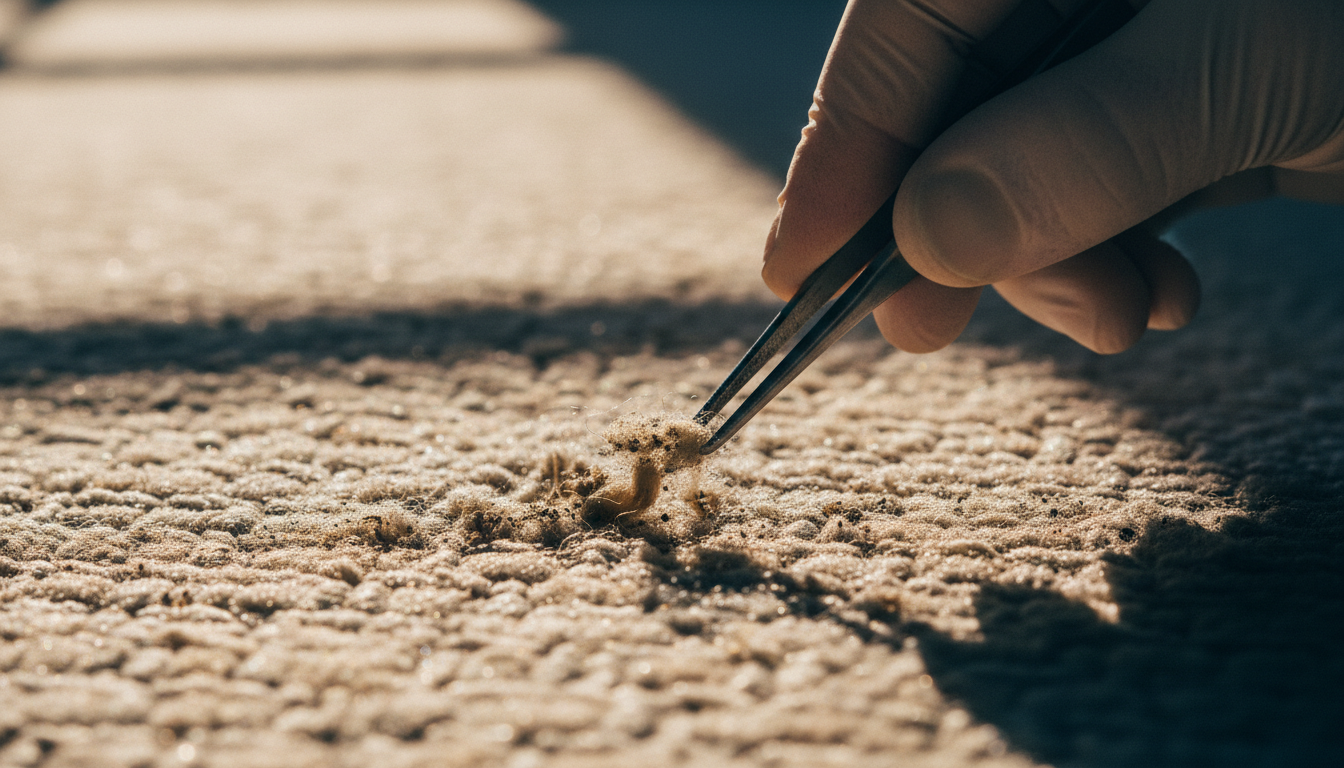
A common question regarding post-clean maintenance is exactly how long a carpet can remain wet before it is permanently ruined. In the professional restoration industry, the window for safety is surprisingly narrow. Mould spores, which are naturally present in almost every indoor environment, require only moisture, a food source like organic dust or wool fibres, and still air to begin colonising. Under these conditions, germination typically occurs within 24 to 48 hours.
If a carpet remains damp beyond this two-day threshold, the issue shifts from a simple drying delay to a potential health hazard. This is particularly critical in modernised London flats where airtight window seals and lack of natural draughts can trap moisture in the underlay. When moisture reaches the primary and secondary backing of the carpet, it becomes significantly harder to extract. This stagnant environment is where the notorious wet carpet smell originates. It is important to understand that this odour is not merely the scent of water; it is the off-gassing of volatile organic compounds produced by rapidly multiplying bacteria and fungi.
Drying Duration | Risk Level | Common Issues |
|---|---|---|
0-12 Hours | Low | Normal evaporation period |
12-24 Hours | Moderate | Possible fibre browning in natural wool |
24-48 Hours | High | Musty odours, microbial colonisation begins |
48+ Hours | Critical | Permanent mould growth, structural damage to backing |
At NanoDefence, our professional carpet, rug, and upholstery cleaning services are designed to avoid this risk entirely by prioritising maximum moisture recovery. While the typical carpet cleaning drying time winter London properties experience can be longer than in summer, our systematic extraction ensures the pile never reaches the critical 48-hour danger zone. If you suspect your carpet has been left saturated for too long following a DIY attempt, you should contact our London team immediately to discuss professional moisture extraction and sanitisation before the damage becomes irreversible.
Professional Extraction vs DIY Machines: The Winter Risk Factor
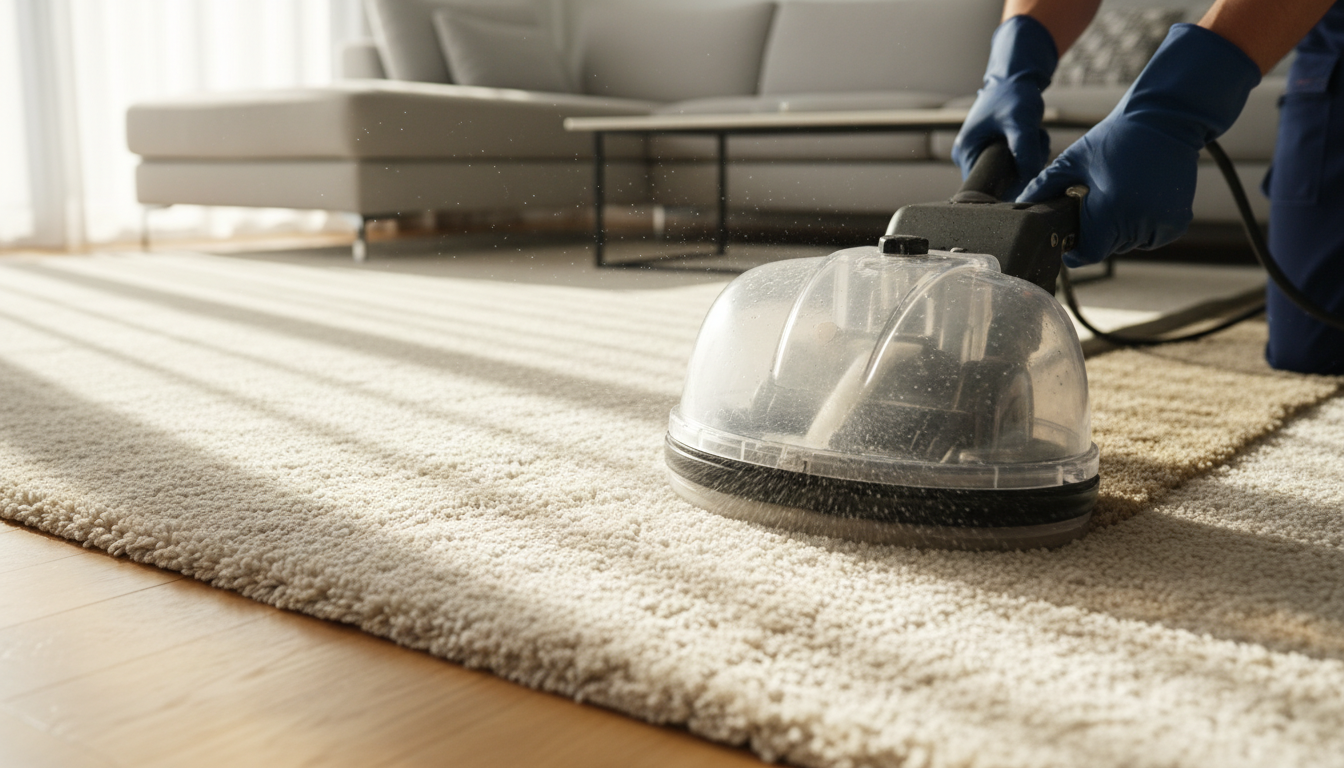
The temptation to use a rental machine or a household brand like Vax or Bissell is understandable for minor spot treatments. However, for a full room deep clean during the winter months, these machines introduce a significant structural risk. The fundamental limitation lies in suction power; consumer-grade units frequently lack the high-performance vacuum motors required to pull water from the deep recesses of the carpet backing and the underlying pad.
In colder, humid conditions, a DIY machine often leaves behind 30% to 50% of the cleaning solution it dispenses. This residual moisture gravitates toward the floorboards, creating a reservoir of dampness that cannot evaporate easily. This is a primary driver behind the extended carpet cleaning drying time winter London properties often struggle with. If the underlay is saturated, the surface may eventually feel dry to the touch while the core remains a breeding ground for microbial growth.
Feature | DIY Machines (Vax/Bissell) | NanoDefence Professional Extraction |
|---|---|---|
Suction Strength | Low (Single-stage motor) | High (Industrial-grade vacuum) |
Moisture Recovery | 50% to 70% | 90% to 95% |
Risk of Saturated Underlay | High in winter | Minimal |
Cleaning Depth | Surface pile only | Full fibre and backing extraction |
Our professional carpet, rug, and upholstery cleaning services use a systematic extraction process that operates on a different scale. NanoDefence technicians utilise industrial-grade extractors that generate massive airflow, ensuring that we are not just cleaning the surface fibres, but actively recovering nearly all the liquid applied. By the time our team finishes a room, the pile is left uniformly damp rather than wet. This precision is what allows us to keep drying times within a safe window. If you have recently used a DIY machine and find the carpet is still significantly wet after several hours, you should contact our London team to perform a professional-grade moisture recovery before the 48 hour mould window closes.
Practical Tips to Speed Up Drying in Cold Weather
Once the professional extraction is complete, you can actively manage your indoor environment to ensure the quickest possible evaporation. Maintaining a stable internal temperature is the most effective strategy. Set your central heating to a consistent 18 to 20 degrees Celsius. This range provides enough warmth to encourage moisture to leave the fibres without being so high that it creates an uncomfortably humid atmosphere.
Air movement is equally vital. Position pedestal fans at the edges of the room to push air across the surface of the carpet rather than pointing them directly down. This creates a cross-flow that breaks the boundary layer of saturated air sitting just above the pile. If your property has a portable dehumidifier, running it in the centre of the room will significantly reduce the carpet cleaning drying time winter London conditions typically impose by stripping moisture directly from the air.
While the carpet remains damp, strict foot traffic control is necessary. Avoid walking on the area with outdoor shoes. London streets are laden with winter grit, salt, and moisture that can easily transfer into the damp fibres, causing re-soiling or even damaging the pile. For best results, keep pets and children out of the area until the carpet is bone dry. If you have questions about the specific airflow requirements for your property, our professional carpet, rug, and upholstery cleaning services include a post-clean assessment, or you can contact our London team for further advice.
How Nano Technology Surface Protection Prevents Future Damp Issues
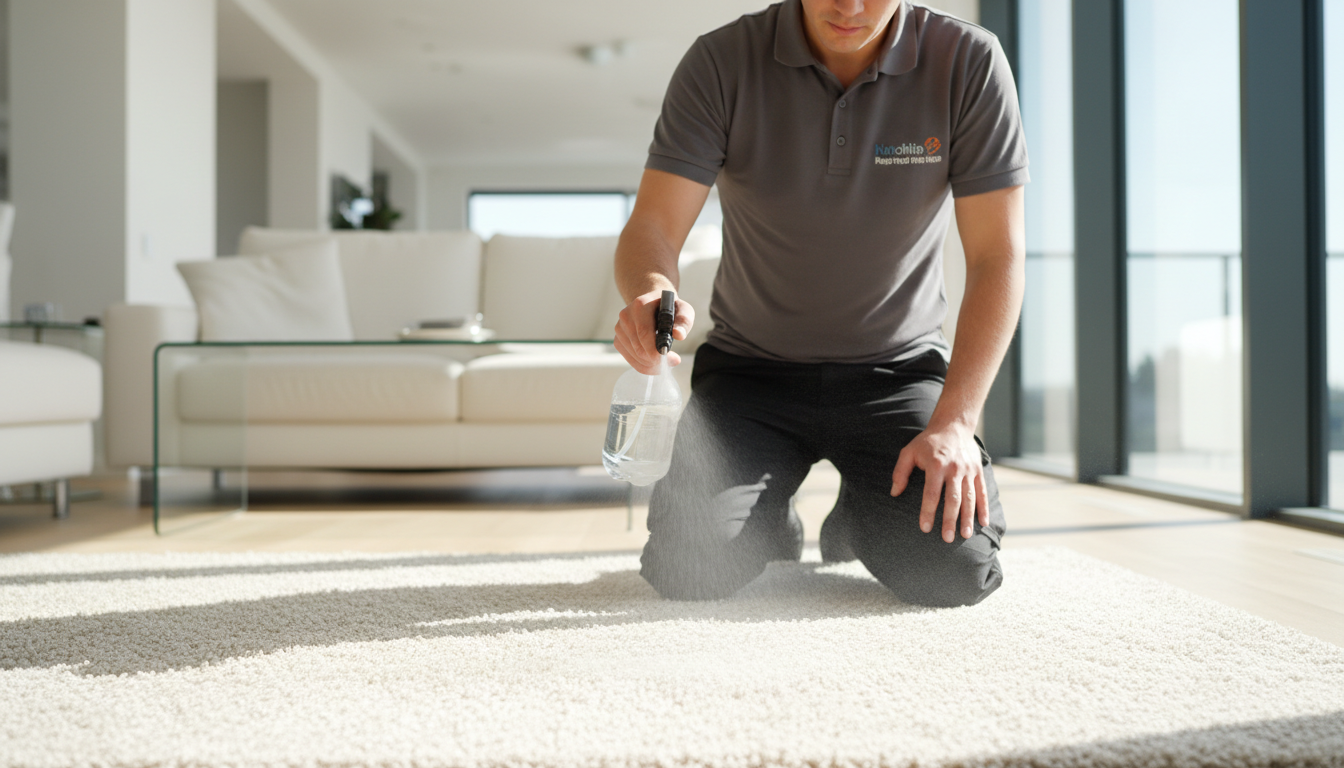
While managing airflow and heat helps in the immediate aftermath of a clean, the most effective strategy for managing moisture involves altering how the carpet fibres interact with liquid at a molecular level. NanoDefence integrates advanced nano-technology surface protection into our professional carpet, rug, and upholstery cleaning services to provide a long-term barrier against the dampness typical of London winters. This treatment involves applying a transparent, breathable shield that coats individual fibres, effectively changing their surface tension without altering the texture or appearance of the pile.
The primary mechanism behind this protection is its hydrophobic property. Unlike traditional protectors that may wear off quickly, nano-technology ensures that liquids remain in a beaded state on the surface of the carpet. For a London property owner, this is a significant technical advantage. If a spill occurs or moisture is tracked in, the liquid is prevented from soaking into the absorbent core of the wool or synthetic material. Because the moisture stays on the surface, it is far easier to blot or extract, which inherently reduces the carpet cleaning drying time winter London properties face during subsequent maintenance.
Feature | Untreated Carpet Fibre | Nano-Protected Carpet Fibre |
|---|---|---|
Water Interaction | Rapid absorption into core | Hydrophobic beading on surface |
Moisture Penetration | Reaches backing and underlay | Limited to surface pile |
Mould Risk | High if deep saturation occurs | Negligible due to surface stay |
Drying Requirement | Intensive evaporation needed | Minimal surface moisture removal |
This technology is a game-changer for high-traffic entryways and hallways during the city's mud and grit season. When slush and salt are tracked onto an unprotected carpet, they often dissolve into a slurry that settles deep within the fibres, creating a reservoir of dampness that takes days to dry. A nano-protected carpet resists this capillary action, ensuring that winter grit stays where it can be easily vacuumed away. To future-proof your floor coverings and reduce the risk of structural dampness, you can contact our London team to discuss incorporating nano-protection into your next maintenance schedule.
Effective moisture management is the secret to preventing mould growth during the damp London winter. By controlling airflow and monitoring humidity, you can significantly reduce drying times and protect your indoor air quality. If you want expert help maintaining a healthy home environment, feel free to browse our professional Services for tailored solutions. Our team provides the specialized care needed to keep your carpets and surfaces in top condition, ensuring peace of mind throughout the coldest months of the year.