
Abrasive particles and moisture cause the winter grit mud carpet damage London properties face by grinding down delicate fibers and trapping corrosive salts deep within the pile. Homeowners can stop this deterioration by implementing barrier mats and using a mixture of vinegar and water to neutralize stains before they set.
London winters introduce a relentless combination of abrasive road salt and viscous mud into your interior spaces. While the immediate visual impact is frustrating, the true threat lies beneath the surface where grit begins its silent destruction. These sharp particles act as microscopic blades, severing luxury carpet fibers with every step taken across the floor. Understanding this degradation is essential for any homeowner or commercial manager looking to preserve their investment against the city's harsh seasonal elements. This guide details the specific mechanics of the sandpaper effect, the chemical risks posed by winter road treatments, and the limitations of traditional cleaning methods. Most importantly, we examine how nanotechnology creates a resilient barrier to safeguard your flooring from the molecular level upward.
The Invisible Winter Threat to London Floorings
London winters are defined by a persistent, damp chill that permeates the City and the West End. This environmental combination of Thames-side humidity and heavy rainfall creates a specific urban cocktail of grime that is uniquely damaging to high-quality floorings. While most homeowners focus on the visible splashes of mud, the more insidious issue is the invisible accumulation of road salt, fine soot, and sharp grit.
In the capital, the grit spread across pavements contains industrial-grade salts and abrasive minerals designed to provide traction on icy surfaces. When tracked onto rugs or carpets, these elements settle deep within the pile, creating a hidden layer of debris that traditional vacuuming cannot reach. Unlike generic garden mud, this urban mixture contains hygroscopic salts that actively pull moisture from the humid London air, keeping the base of your carpet damp even when the central heating is on. This process initiates a cycle of winter grit mud carpet damage London properties are particularly susceptible to due to high foot traffic and atmospheric pollution.
Understanding that your flooring is under a combined mechanical and chemical attack is the first step in long-term preservation. Addressing these hidden contaminants requires more than a surface sweep. Utilizing professional carpet cleaning services ensures that these microscopic abrasives are physically extracted before they can compromise the structural integrity of the fibres. To protect your home or office, Contact our London team for a specialist assessment.
The Sandpaper Effect: How Grit Cuts Your Carpet Fibres
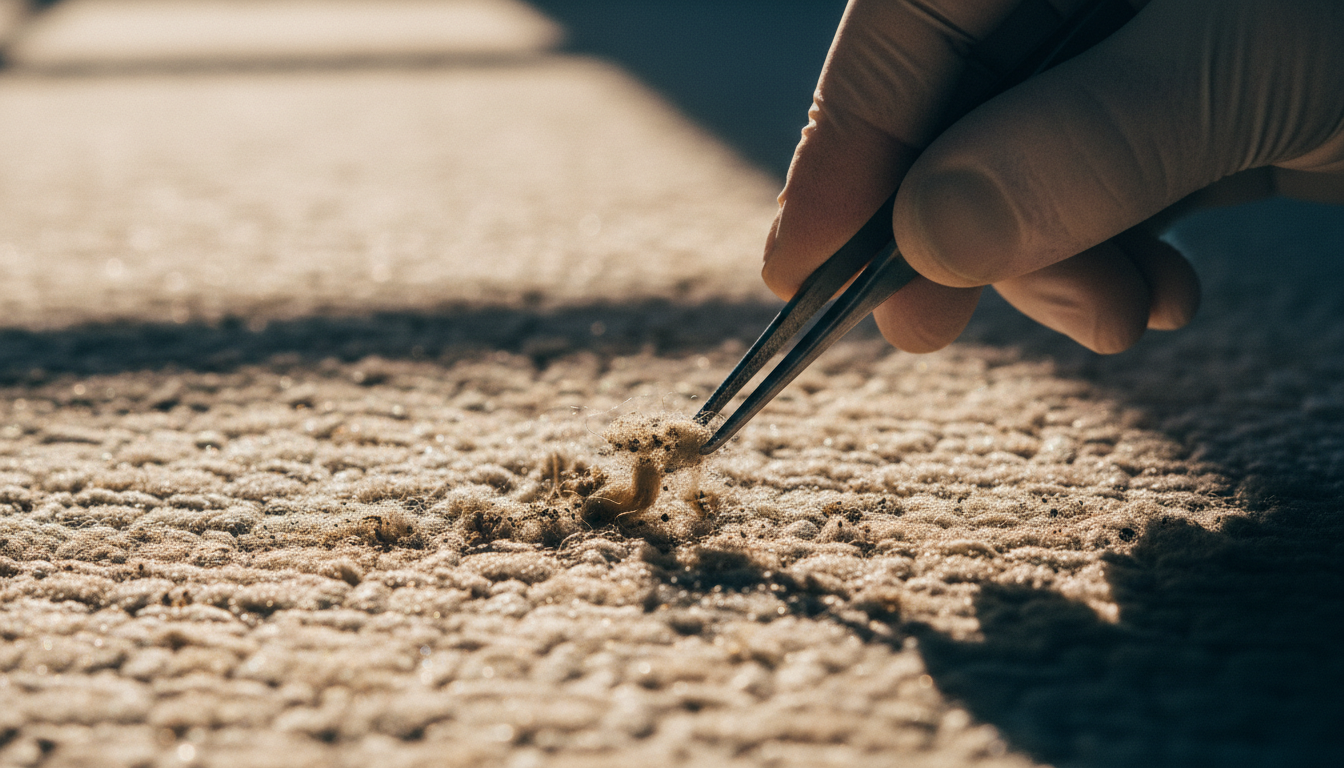
The primary mechanism behind winter grit mud carpet damage London homes experience is mechanical degradation. While surface mud is unsightly, the real destruction occurs at the base of the pile. When sharp silica and road grit are tracked in from the pavement, their weight causes them to sink deep beneath the visible surface. As people move through the property, the pressure of each footstep grinds these jagged particles against the carpet fibres. This creates a sandpaper effect, where the grit acts like microscopic saws, slicing through the delicate filaments of wool or synthetic blends.
In the narrow hallways of Victorian terrace houses or the high-traffic entryways of modern City apartments, this damage manifests as a fuzzy texture or a prematurely bald appearance. This is not merely dirt; it is the physical loss of carpet material. A common question we encounter is, what pulls dirt out of carpet effectively? While high-quality vacuuming is essential for daily maintenance, it often fails to address this deep-seated abrasive layer. Standard suction typically only reaches the top third of the pile, leaving the most damaging grit undisturbed at the bottom where it continues to cut into the structural yarns.
Preventing this structural failure requires more than just a surface sweep. Physically removing these embedded shards requires the industrial-grade power found in professional carpet cleaning services. By utilizing deep-extraction methods, we can lift the grit that vacuuming leaves behind before it can further sever the fibres. For those looking to add a layer of resilience, Nano Carpet Protection provides a molecular barrier that helps keep these abrasives from wedging into the fibre weave. To ensure your flooring survives the season, Contact our London team for a specialist assessment.
The Chemical Battle: Why Road Salt and White Marks Matter
Beyond the physical abrasion of grit, London’s winter streets introduce a corrosive chemical element: rock salt. As councils treat pavements across the City, this salt is inevitably tracked into residential hallways and commercial lobbies, manifesting as stubborn white, crusty rings once the initial moisture evaporates. These deposits represent a significant stage of winter grit mud carpet damage London properties face, moving the threat from mechanical wear to chemical degradation.
Salt is naturally hygroscopic, meaning it actively attracts and retains moisture from the humid London air. Even when your central heating is active, salt deposits trapped in the pile continue to pull water into the carpet, creating localized pockets of dampness. This persistent moisture weakens the structural integrity of the fibres and can lead to hidden rot or mould growth within the backing materials.
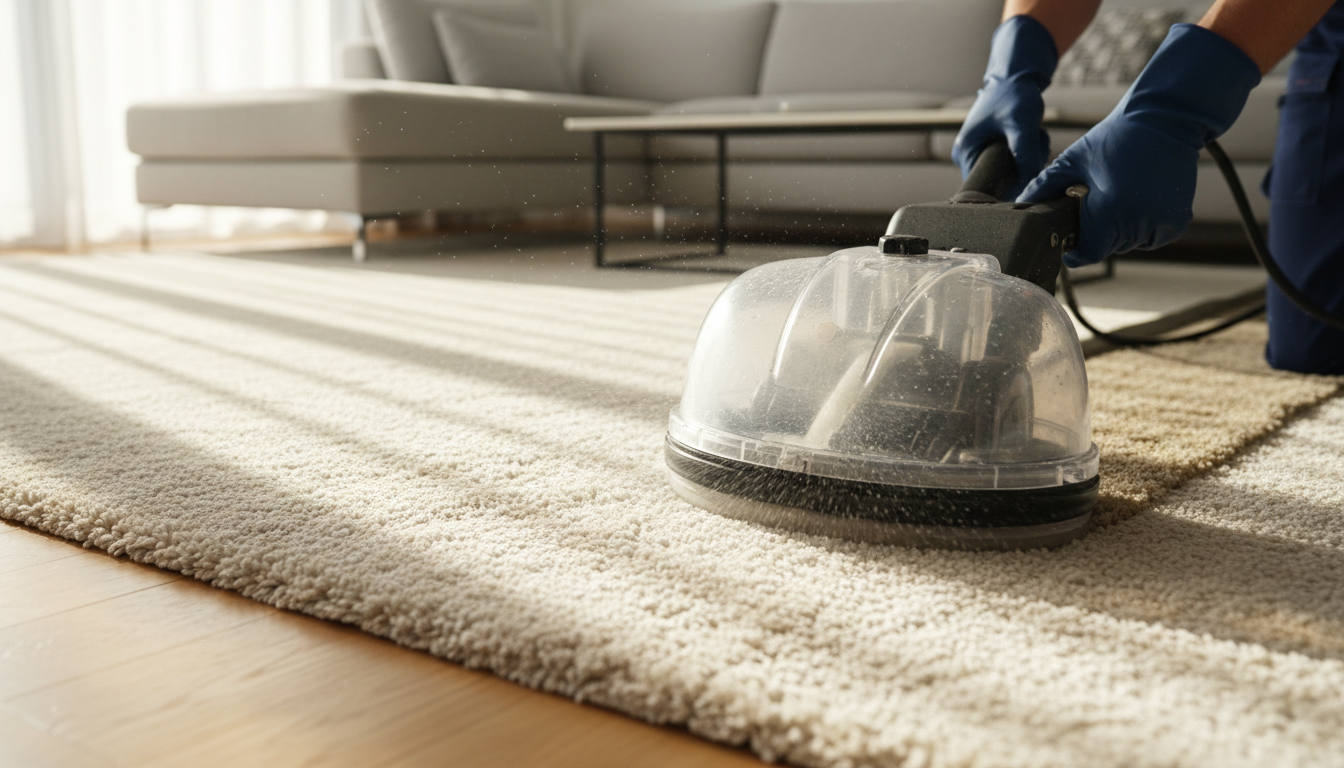
Clients frequently ask: are salt stains permanent? While the white mineral residue can typically be extracted, the chemical impact of salt is often irreversible if left too long. Road salt is highly alkaline; this high pH level can trigger dye bleed in natural wool or cause permanent yellowing on synthetic fibres. When considering how to get white marks out of carpet, it is vital to use professional pH-neutralizing rinses rather than generic soaps, which can exacerbate the alkalinity. Professional carpet cleaning services utilize specialized solutions to stabilize these fibres and fully flush out the mineral content. To safeguard your flooring against chemical burning this season, Contact our London team for an expert deep-clean assessment.
Moisture and Mud: A Recipe for Fibre Weakening
Beyond the chemical reaction of salt, the sheer volume of moisture introduced during a London winter fundamentally alters carpet physics. Rainwater and slush saturate the pile, temporarily softening the structural integrity of both wool and synthetic fibres. In this state, the fibres lose their natural resilience, making them significantly more prone to flattening and permanent deformation under foot traffic. This softening is why high-traffic zones in hallways often look matted long before the rest of the room.
While the carpet remains wet, it acts as a reservoir for bacteria and allergens. The high humidity levels characteristic of London properties, particularly in older builds or Thames-adjacent flats, prevent rapid natural drying. This prolonged dampness is the primary catalyst for carpet shrinkage, a significant risk where the backing materials contract at a different rate than the surface pile, leading to unsightly ripples or gaps at the skirting boards.
When this moisture-laden mud finally dries, it creates a hard, encrusted bond that cements urban particulates directly to the fibre. This process makes the extraction of the grit mentioned earlier nearly impossible with domestic equipment. Addressing this complex interaction of water, soil, and fibre weakening requires professional carpet cleaning services to safely remove the bonded pollutants without risking structural shrinkage. To protect your flooring before these physical changes become permanent, Contact our London team for an expert assessment.
Why DIY Cleaning Methods Often Fail in Winter
Many homeowners turn to kitchen cupboard staples like white vinegar, washing up liquid, or baking powder when faced with visible winter stains. While these home remedies can occasionally lift a surface level spill, they are fundamentally ill equipped to combat the complex winter grit mud carpet damage London properties endure. Vinegar is an acid that can disrupt the pH balance of delicate wool, while baking powder often settles into the backing, becoming part of the abrasive debris rather than removing it.
The most significant risk of DIY cleaning during the colder months is over wetting. Unlike professional systems, domestic machines and manual scrubbing leave behind excessive moisture. In the damp London climate, a saturated carpet may take days to dry. This stagnant water creates a breeding ground for bacteria and can lead to cellulosic browning, a phenomenon where the carpet backing releases brown tannins that wick up to the surface. Furthermore, these methods do nothing to address the sharp silica grit trapped at the base of the pile.
True remediation requires professional carpet cleaning services that utilize high powered, deep extraction technology. This process uses focused heat and industrial strength suction to physically lift abrasive particles and chemical salts out of the weave. For those seeking long term resilience, applying Nano Carpet Protection creates a surface tension that prevents liquids and grit from penetrating so deeply in the first place. To avoid the structural risks of DIY errors, Contact our London team for a safe, thorough deep clean.
Nano-Technology: The Winter Shield for Your Carpets

To truly combat the pervasive cycle of winter grit mud carpet damage London properties endure, the strategy must move from reactive cleaning to proactive defence. This is where Nano Carpet Protection becomes an essential component of floor maintenance. Unlike traditional silicon-based sprays that simply coat the surface, advanced nano-technology works at a molecular level to create an invisible shield around each individual carpet fibre.
This molecular barrier significantly increases surface tension. When liquid mud or slush hits the carpet, it beads up rather than soaking into the weave. For dry contaminants like the hygroscopic road salt discussed earlier, the shield prevents the crystals from bonding to the fibre. Because the salt and grit stay suspended on the surface of the shield rather than embedding deep in the pile, a high-quality vacuum can finally do its job effectively. The grit is removed before it has the chance to settle into the backing and begin the abrasive cutting process.
This level of protection is particularly vital for London households during the winter social season, where enforcing a strict no shoes policy is often impractical for dinner parties or holiday gatherings. For property managers in areas with high tenant turnover, such as Canary Wharf or Marylebone, nano-protection acts as a critical safeguard against the accelerated wear caused by constant foot traffic in wet weather. By integrating this technology, the structural integrity of the flooring is preserved against the sandpaper effect of winter debris. To secure this long-term protection, Contact our London team to discuss a professional application following our deep extraction professional carpet cleaning services.
Practical London Winter Carpet Care Tips
Managing the cumulative winter grit mud carpet damage London homes face requires a disciplined maintenance routine. Effective protection starts at the threshold with a dual-barrier system. Place a heavy-duty scraper mat outside your entrance to dislodge coarse pavement grit, followed by an absorbent cotton or microfibre mat inside to capture the Thames-side moisture before it hits your flooring.
When mud is tracked in, resist the urge to scrub. For thick mud, let it dry completely until it turns brittle, then carefully vacuum the solids away. For wet stains, blot gently with a clean cloth without pushing the moisture into the backing. Increase your vacuuming frequency to at least three times a week in high-traffic zones to prevent silica from settling.
Crucially, schedule your professional carpet cleaning services during the peak of winter rather than waiting for a spring clean. Removing abrasive particulates in January prevents months of structural fibre degradation. For a bespoke maintenance plan tailored to your property, Contact our London team to ensure your carpets remain resilient against the elements.