
Landlords should clean carpets that are in good repair to maintain hygiene, but they must replace them if they are older than eight years or show damage beyond fair wear and tear. The question of should landlord replace or clean carpet London is typically decided by assessing the flooring's age and whether its condition meets the professional standards required for a new tenancy.
Navigating the transition between tenancies in London often reveals a frustrating reality; the state of the flooring. A stained or worn carpet creates an immediate financial dilemma, forcing landlords to choose between the high capital expenditure of replacement and the potential inadequacy of a standard clean. This decision carries significant weight, impacting both your property’s market value and your compliance with fair wear and tear regulations under UK law. In this guide, we provide a sophisticated framework for evaluating your rental’s flooring. You will learn how to distinguish between permanent damage and restorable fibers, the specific legal thresholds for replacement, and how advanced deep extraction can salvage even the most neglected carpets. We also explore the role of nano-protection in extending asset life, ensuring your investment remains pristine through multiple tenancies.
The London Landlord Dilemma: Replacement Costs vs. Restoration Results
Managing a high-yield rental in Kensington, Canary Wharf, or Clapham demands a focus on presentation. In these competitive markets, the condition of the flooring often dictates the speed of the let and the monthly rent achieved. When a tenant moves out and leaves behind a dull, stained carpet, the immediate instinct is to look for a replacement. However, the financial reality of property management requires a more calculated approach.
The question of if a should landlord replace or clean carpet London property owners face is not just about aesthetics; it is about the bottom line. A high-quality carpet can last 10 to 15 years if maintained, yet many are discarded prematurely due to surface-level neglect. Replacing carpets involves significant capital expenditure, furniture removal logistics, and extended void periods while waiting for fitters. Every day a flat sits empty for renovations, the annual yield drops.
Restoration through professional carpet and rug cleaning services often reveals that a carpet is not dead, but simply suffering from accumulated urban pollutants and traffic lane graying. This guide shifts the focus from purely visual standards to a rigorous cost-benefit analysis. By utilizing advanced nano-technology surface protection, landlords can often avoid the high costs of new installations. For a deeper look at managing transitions, our End of Tenancy Carpet Cleaning London Property Manager Guide explores how to maintain these standards efficiently between lets.
Understanding Fair Wear and Tear in UK Tenancy Law

Navigating the legal framework of the Tenancy Deposit Scheme (TDS) and Deposit Protection Service (DPS) is essential when deciding if a should landlord replace or clean carpet London property owners often ask. UK tenancy law hinges on the principle of fair wear and tear, which describes the natural, gradual deterioration of a property through ordinary, everyday use. For carpets, this includes minor pile flattening in high traffic zones or slight fading caused by sunlight. In contrast, tenant damage involves avoidable neglect or accidents, such as deep cigarette burns, heavy tea stains, or pet related soiling.
A frequent question in the industry is, 'Is carpet a 5 or 7 year property?' While there is no rigid statutory expiration date, the general consensus for rental grade carpeting is a lifespan of 5 to 8 years. Landlords must avoid the trap of betterment; they cannot legally charge a tenant for the full cost of a new carpet if the existing one was nearing the end of its natural life. If a five year old carpet is damaged, the landlord is only entitled to the depreciated value of the flooring, not a brand new replacement.
Carpet Grade | Expected Lifespan (Years) | Depreciation Category |
|---|---|---|
Budget / Rental Grade | 5, 8 | Fast |
Mid-Range / Domestic | 8, 12 | Moderate |
High-End / Luxury | 12, 15+ | Slow |
Because the burden of proof in a deposit dispute rests solely on the landlord, commissioning professional carpet and rug cleaning services is often the most legally defensible first step. It demonstrates a proactive attempt to mitigate loss. If professional extraction cannot rectify the damage, the invoice serves as documented evidence for the adjudicator that replacement was the only remaining option. For those managing high turnover portfolios, consulting an End of Tenancy Carpet Cleaning London Property Manager Guide can clarify these obligations and help protect your yield against unfair claims.
Three Signs You Must Replace the Carpet
While professional carpet and rug cleaning services can rectify severe soiling, some conditions represent a total loss of asset value. Recognizing the point of no return prevents wasted expenditure on restoration attempts that cannot succeed. If the carpet exhibits any of the following three signs, replacement is generally the only viable path for a London landlord.
Structural Failure and Safety Risks: Structural damage extends beyond surface aesthetics. Large cigarette burns that penetrate the backing, significant rippling caused by latex delamination, or frayed seams in doorways create trip hazards. If the integrity of the textile is compromised to the point of being a liability, the cost of a specialist repair often approaches the cost of new installation.
Deep-Seated Biological Hazards: Mould growth beneath the pile or persistent damp smells are critical warning signs. In London properties where moisture levels can fluctuate, pathogens often thrive in the underlay. While deep extraction can sanitize the surface, it cannot reach spores embedded in the subfloor. For the health and safety of incoming tenants, biological contamination usually mandates a full tear-out.
Irreversible Fibre Loss: As mentioned in our End of Tenancy Carpet Cleaning London Property Manager Guide, a carpet is considered reaching its end of life when it has worn down to the primary backing. Faded or balding patches in high-traffic zones mean the actual pile has been removed through friction. Because there is no fibre left to receive advanced nano-technology surface protection, cleaning will only serve to highlight the thinness of the remaining material.
Why Deep Extraction Can Save a 'Ruined' Rental Carpet

Many landlords mistake heavily soiled traffic lanes for irreversible wear. In high-density London areas like Canary Wharf or Kensington, carpets are bombarded by urban pollution, soot, and fine grit carried in from the street. When this particulate matter settles at the base of the pile, every footstep causes the grit to grind against the fibres. This creates a mechanical abrasion similar to sandpaper, which dulls the sheen and makes the carpet appear ruined.
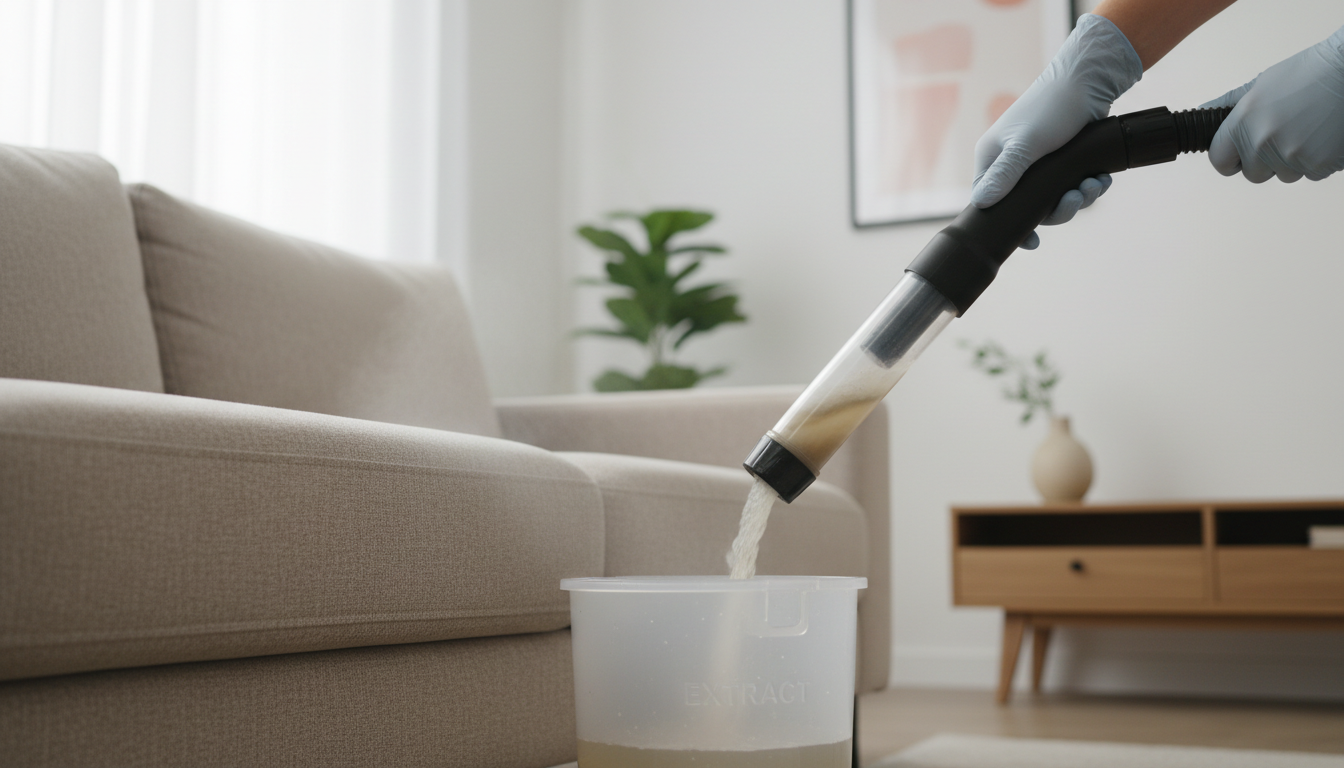
NanoDefence utilizes a multi-stage deep extraction process that addresses this at a molecular level. Unlike standard rental machines or DIY rug doctors, which often lack the suction power to remove the slurry they create, our industrial-grade equipment uses high-heat pressurized water to emulsify oils and lift trapped grit. A common mistake in property management is using domestic detergents that leave a sticky soap residue. This residue acts as a magnet for new dirt, leading to rapid re-soiling and the false impression that the carpet is failing.
When evaluating the question of should landlord replace or clean carpet London rental units often show the most significant improvement in hallways and lounge entrances. These zones frequently look grey and matted down. However, professional extraction often reveals that the fibres are simply compressed by layers of dust and oils rather than being physically worn away. By removing these contaminants, professional carpet and rug cleaning services restore the carpet's loft and appearance.
For property managers, this distinction is vital for maintaining margins. According to our End of Tenancy Carpet Cleaning London Property Manager Guide, restoring a carpet through deep extraction is not only faster than a full replacement but also prepares the material for the application of advanced nano-technology surface protection. This ensures the carpet remains resilient against the next tenant's foot traffic and accidental spills.
The Nano-Protection Factor: Extending Carpet Life for Future Tenancies

Once deep extraction has restored the pile, the carpet is in its most receptive state. Applying advanced nano-technology surface protection at this stage transforms the textile from a porous sponge into a resilient barrier. Unlike traditional silicon based protectors that merely coat the top of the fibres, nano-coatings bond at a molecular level. This creates a hydrophobic layer that forces liquids to bead on the surface rather than soaking into the backing.
For a London landlord, this technology provides a vital insurance policy against the next tenancy. Accidental spills of red wine, coffee, or ink, which would typically result in a permanent stain and a deposit dispute, can often be blotted away with ease. By preventing chemical bonding between the spill and the fibre, the coating ensures that future professional carpet and rug cleaning services are more effective and less abrasive.
Incorporating this into a maintenance schedule changes the answer to the question of should landlord replace or clean carpet London property owners frequently ask. Instead of viewing cleaning as a temporary fix, nano-protection makes it a long term asset management strategy. According to our End of Tenancy Carpet Cleaning London Property Manager Guide, this proactive approach can add three to five years to the functional life of rental flooring, significantly deferring the high capital costs of total replacement.
Cost Benefit Analysis: Replacement vs. Professional Recovery
When calculating if a should landlord replace or clean carpet London investment makes financial sense, the true cost extends far beyond the invoice from a flooring showroom. For a standard two-bedroom flat in a high-demand area like Clapham or Canary Wharf, the capital expenditure of replacement often dwarfs the cost of professional restoration. Beyond the materials, landlords must account for fitting fees, waste disposal, and the logistical burden of moving furniture.
Expense Category | Replacement (New Mid-Range Carpet) | Professional Recovery + Nano-Protection |
|---|---|---|
Materials & Underlay | £1,500 – £1,800 | £0 |
Labour / Fitting / Disposal | £400 – £600 | £0 |
Professional Deep Extraction | £0 | £180 – £250 |
Nano-Technology Coating | £0 | £120 – £180 |
Total Direct Cost | £1,900 – £2,400 | £300 – £430 |
The most significant hidden variable is the void period. Scheduling fitters and waiting for stock can easily leave a property empty for seven to ten days. At an average London rent of £2,200 per month, a ten day vacancy costs the landlord roughly £730 in lost revenue. In contrast, professional carpet and rug cleaning services usually require only a few hours of onsite work, with carpets dry and ready for viewings by the next morning.
Opting for recovery through advanced nano-technology surface protection effectively preserves the asset's value while keeping the property on the market. As outlined in our End of Tenancy Carpet Cleaning London Property Manager Guide, restoring a carpet for less than 20 percent of the replacement cost allows landlords to maintain high yields without compromising the premium feel of the residence.